
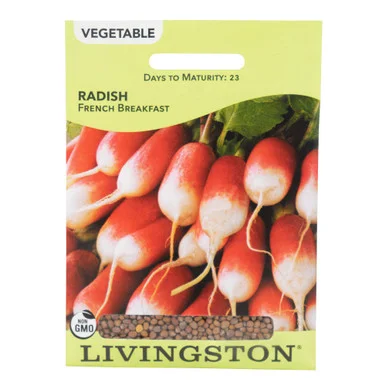
Description
Planting French Breakfast Radishes
‘French Breakfast’ radish varieties require the same basic planting procedures as other radish types. They grow well in moist, well-drained soil in beds that receive about six hours of sunlight daily. Sow the breakfast radish seeds in rows, spacing them about 4 inches apart in rows 8 to 12 inches apart. The seeds are planted 1/4-inch deep and typically sprout within seven days if the soil remains moist.
Alternatively, use radishes between slower-growing crops as a means of maximizing your garden space and helping subdue weeds. Plant them every week or two, until hot weather makes them “bolt” or go to seed, for a continuous harvest.
Basic Care and Harvesting
Once planted, ‘French Breakfast’ radishes require little more than regular watering. Irrigate the bed when the top 1/2-inch of soil feels dry, maintaining moisture in the top 6 inches of soil. The plants grow quickly and don’t usually require fertilizer if grown in soil rich with organic matter, such as a compost-amended bed.
Weeds can choke out radishes until they’re established and into their rapid-growth phase, so regular weeding is necessary at first. You can begin harvesting ‘French Breakfast’ when the roots are about 2 inches long, about 20 days after planting. Harvesting later can result in woody, bitter radishes.
Breakfast radish greens can be harvested as well, at the “baby” stage from half-grown radishes or once they’re mature and full-sized. Use small greens raw, but cook mature greens if you find them strong-tasting or dislike their prickly fuzz. Treat the greens as a “cut and come again” crop, selectively harvesting just one or two leaves at a time from each plant.
Problems With French Breakfast Radishes
Radishes grow quickly so they rarely suffer pest or disease problems. Aphids may feed on the leaves, but you can rinse them off with a sharp spray of water. Root maggots can tunnel into the developing roots, ruining the radish. If root maggots become a problem, plant in a different bed or treat the soil with an insecticide formulated for these pests. Hot weather prevents roots from forming, as does drought stress. Planting during the cool spring or fall season prevents this issue.
Reviews
There are no reviews yet.